Eave and Fascia Vents A Low Level Solution for High-Performance Roof Ventilation
Eave and fascia vents create cooler, drier, more durable roof spaces by bringing air in low at the building’s edge. Either instead of roof-only vents or in combination with them. Alpine Ventilation’s Australian-designed eave and fascia products add compliance, durability, and discreet aesthetics to this ventilation strategy.
Why vent at the eave and fascia?
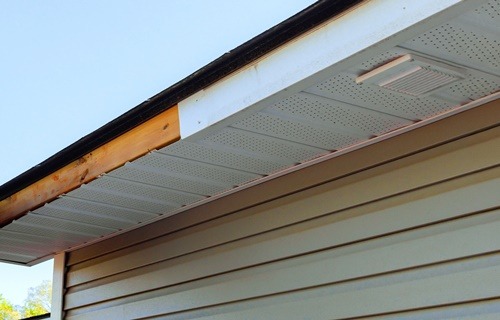
Venting at the eaves and fascia introduces fresh air where heat and moisture first collect. Helping to flush the entire roof cavity rather than just the upper hot spot near the ridge. This low-level intake improves airflow under the roof deck. Which can reduce summer heat build-up and winter condensation that leads to dampness and mould.
Because eave and fascia vents sit in the overhang. They are less exposed to direct rain and wind pressure than many roof-mounted penetrations. Lowering the risk of leaks over time. Their position also makes them ideal partners for ridge or roof vents. Fresh air enters at the eaves and exits at the top. Creating a continuous flow path that keeps the roof space cooler and drier.
Benefits over roof-only vents
Roof-only vents rely on openings through the roof membrane, which can be more vulnerable to flashing failures, storm damage, and water ingress if poorly detailed or aged. Eave and fascia vents, by contrast, sit in cladding or soffit materials that are easier to integrate and keep watertight, significantly reducing the chance of roof-vent leaks.
Low-level intake also helps manage condensation by supplying ample outside air to dilute moist indoor air that migrates into the roof space. Combined systems—eave/fascia intake plus ridge or roof exhaust—provide more even ventilation across the roof cavity than isolated roof vents, which tend to create localized hot or cold spots.
NCC compliance, condensation and bushfire performance
Modern Australian codes place strong emphasis on condensation management and correct discharge of exhaust air to the outside. Alpine’s eave and fascia vents assist with NCC 2022 condensation and ventilation provisions (Clauses 10.8.2 and 10.8.3) by providing defined free-air areas and compliant pathways for rangehoods, exhaust fans, and roof-space ventilation.
Selected Alpine metal eave and fascia vents are recognised as compliant up to BAL-40 under AS3959-2009. Helping builders meet bushfire construction requirements in exposed locations. This combination condensation control, correct exhaust terminations and bushfire-tested design. Simplifies specification for Australian projects looking to meet both performance and regulatory targets.
Key Alpine eave and fascia vent attributes
Alpine’s eave and fascia range is built specifically for Australian housing. With formats that suit both general roof-space ventilation and ducted appliances.
- Metal eave and fascia vents (e.g. 400 x 200 mm and 600 x 140 mm sizes) provide generous free area for airflow. Helping cool roof spaces in summer and curb dampness and mould in winter.
- Small perforations act like an integrated mesh, blocking pests and insects from entering the roof cavity while still allowing high levels of ventilation.
- Powder-coated aluminium and steel construction delivers robust. Long-term performance in exterior environments, with options recognised for BAL-40 bushfire zones and NCC 2022 Clause 10.8.3 compliance.
- Snap-in plastic and aluminium-face eave vents offer a low-cost, practical and discreet solution. With UV-stabilised components and removable mesh for easy cleaning and maintenance.
- Ducted fascia vent kits are purpose-designed for venting rangehoods and exhaust fans via the fascia. Supplied with matching duct and adapters to simplify installation and assist with NCC 2022 Clause 10.8.2 compliance for exhaust terminations.
These products are designed to integrate neatly with typical Australian eaves and fascias, making it straightforward to add compliant. Effective ventilation without compromising the appearance of the home.
When to combine eave/fascia vents with roof vents
In many homes, the best result comes from pairing eave or fascia vents (for intake) with ridge or roof vents (for exhaust) to create a complete airflow circuit. This configuration improves temperature control, protects roof materials from moisture-related damage. Supports healthier indoor conditions by reducing the risk of condensation and mould in the roof space. Alpine’s eave and fascia vents are engineered to work either as standalone intake points for simple roof-space ventilation or in combination with roof vents and mechanical exhaust systems for higher-performance designs. For new builds and retrofits alike, they offer a practical, code-aligned way to upgrade ventilation. The building perimeter while minimising roof penetrations and leak risk. Alpine Ventilation sells their products through resellers such as Bowens, Dahlsens, Accord Air, Bunnings and much more. Checkout the stocks page to find out which reseller is closest to you.
Disclaimer
The information provided in this article is for general informational and educational purposes only. While every effort has been made to ensure accuracy. Alpine Ventilation and the author do not guarantee that the information is complete, current, or suitable for your specific building project. Readers should not rely solely on this article for design, construction, or compliance decisions. Always consult relevant building codes, regulations (including NCC 2022 provisions), product specifications. Qualified building professionals before selecting, installing, or modifying roof ventilation systems. Alpine Ventilation products mentioned are subject to availability and specific performance conditions; individual results may vary.